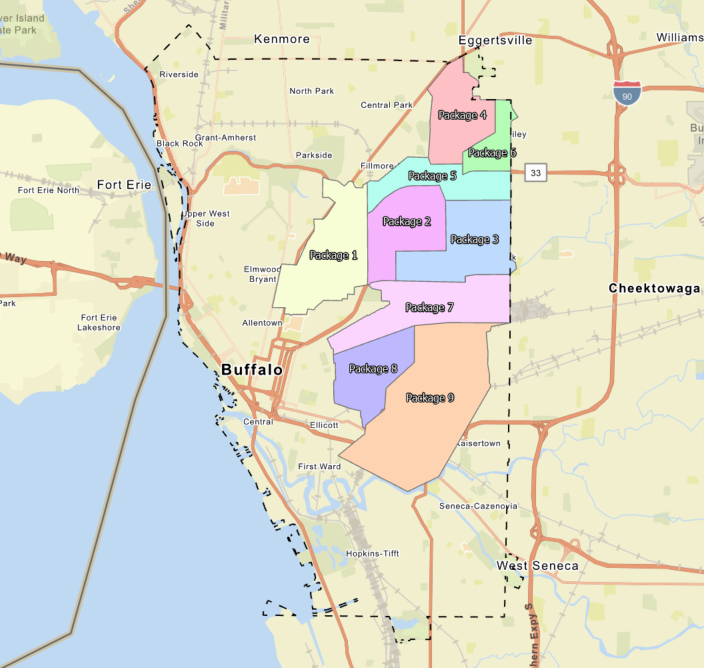
Buffalo Sewer Authority Green Stormwater Infrastructure Rain Check 2.0 Project Packages
The Rain Check 2.0 Green Infrastructure Program is improving Buffalo’s sewer system by installing projects that capture and manage stormwater before it enters the combined sewer system. These projects reduce flooding, protect local waterways, and add green features to neighborhoods, schools, and parks throughout the city.
Projects are organized into 14 design and construction packages, allowing work to move forward in phases across different areas of Buffalo.
What Residents Can Expect During Construction
Construction will be completed in phases across different neighborhoods as each project package moves forward. While schedules and locations vary, typical construction activities follow a consistent sequence.
Before Construction
Residents and businesses near active work areas will receive advance notification. Utility marking, surveying, and site investigations may occur before visible construction begins.
During Construction
Work will generally occur during daytime hours. Temporary impacts may include sidewalk or parking lane closures, construction noise, and short-term traffic changes. Safe access to homes, schools, businesses, and parks will be maintained whenever possible.
After Construction
All disturbed streets, sidewalks, grassy areas, and park features will be restored or improved. Over time, newly installed green infrastructure will mature and provide long-term drainage and environmental benefits.
Staying Informed
Construction schedules may change due to weather or site conditions. Updates will be shared through Buffalo Sewer Authority communications and on-site signage.
Implements large-scale stormwater improvements beneath parking areas and along streets within housing campuses at the Ferry Grider, Kenfield and Langfield sites. These systems capture runoff from roadways and help reduce flooding while adding new street trees. Pavements, sidewalks, and landscaped areas will be restored after construction.
Design: June 2025 – Winter/Spring 2027 | Construction: Summer 2027 – Spring 2028
Installs stormwater systems on 16 school properties and nearby streets to capture roof and pavement runoff. The systems will include underground storage beneath parking lots, landscaped rain gardens on school properties, and subsurface infiltration systems. Parking lots will be repaved and all disturbed areas will be restored to maintain safe access for students and staff.
Design: March 2025 – Fall 2026 | Construction: Spring 2027 – Spring 2028
Includes a large underground stormwater storage system built beneath a grassed area of Hennepin Park. A new path will be built connecting perimeter sidewalks with the park amenities, the basketball court will be repaved, and the playground will receive drainage improvements.
Design: September 2024 – October 2025 | Construction: Fall 2026 – Winter 2027
Installs underground storage, stormwater tree trenches, planters, and landscaped bioretention areas at Martin Luther King Jr. Park, Genesee Gateway, Eddie Dawson Park and Lincoln Park. Walkways, curbs, and park features affected by construction will be restored.
Design: November 2024 – Fall 2026 | Construction: Spring 2027 – Spring 2028
Includes underground stormwater storage and stormwater tree trenches within parks and along adjacent streets at Schiller Park, Mary Jean Sloan Park and Hank Nowak Park. Park amenities will be repaired and restored after construction, including replacing the sports court at Hank Nowak Park and new pedestrian pathways at Schiller Park.
Design: May 2025 – Fall 2026 | Construction: Spring 2027 – Spring 2028
Includes stormwater tree trenches, subsurface infiltration systems and landscaped rain gardens that capture runoff from streets and sidewalks. These systems collect street stormwater runoff, store it underground, and allow it to soak into the soil to reduce sewer flows while supporting new street trees and improved streetscapes. Parking lanes, sidewalks, curbs, and other pavement disturbed during construction will be restored. Where possible, new street trees and improved streetscapes will be included.
Design: May 2025 – Fall/Winter 2026 | Construction: Spring 2027 – Spring 2028